
Stairlifts
Whether you call them stair-lifts, stair chairs, chairlifts, stair glides or any number of other clever names, these helpful products can make a world of difference when it comes to improving home accessibility and safety for people who want to age in place. Most commonly known as stairlifts to those of us in the industry, these devices have a lot of misconceptions about them. Let's bust some of these mobility myths about installing a stairlift in your home!
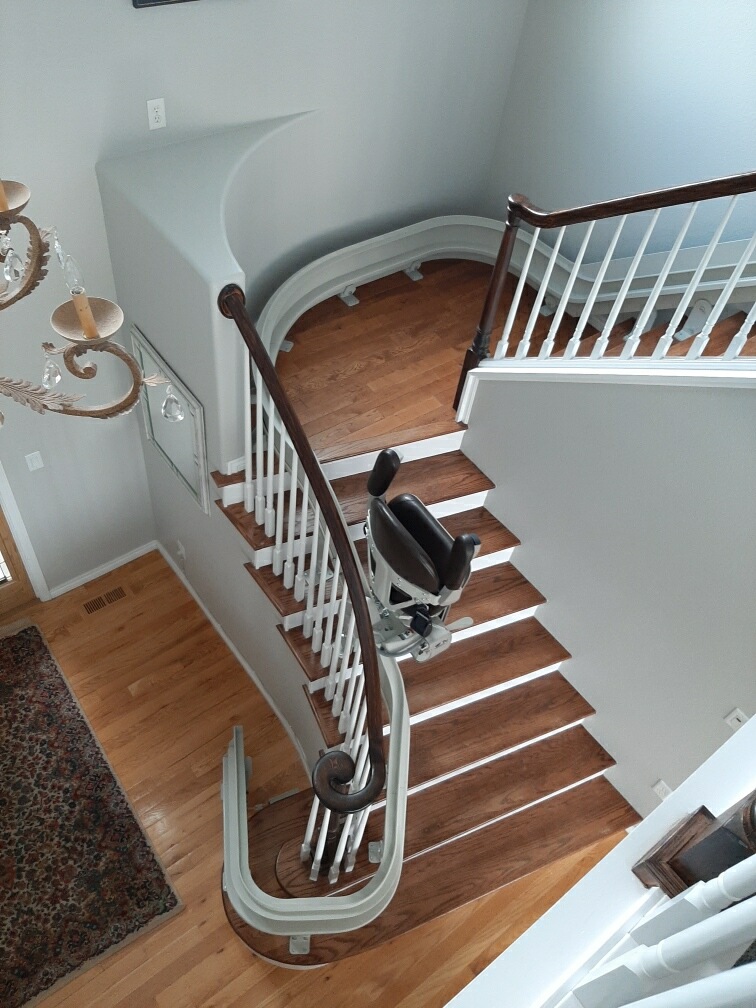 Myth #1: I need a structural wall in order to install a stairlift in my home. Actually, you don't! Stairlifts get installed directly into the stair treads (the step part of the floor that you walk on) with lagbolts. They can be installed into tile, wood, concrete, LVP or carpet, and hardly leave any evidence that they were ever installed if they need to be removed. Incline platform lifts, on the other hand, do require wall reinforcements because they carry the weight of a wheelchair on a large platform that pulls differently on the chassis and rail system. You can read more about wheelchair lifts on this page.
Myth #2: It will take up all the room on my stairs and block access for others in my home. Not quite! The biggest part of a stairlift is the chair and motor, sometimes called the carriage. The chair, armrests and footrests fold up against the wall when not in use, and only stick out from the wall about 12-14". This means that on a standard three-foot wide staircase, there will still be about 24" of room to walk past the chair part of the lift (which is the most narrow part of the whole system). Once the person has walked by the chair, they have virtually the entire width of the staircase available to them, as well as access to the handrail(s) just like normal. The track itself takes up about 4-8" on the lowest, outside part of the stairway, leaving plenty of room for a person to walk by when the chair isn't being used.
Myth #3: I'll be stuck in part of my home if the power ever goes out. Nope! The stairlifts all come equipped with a set of batteries that power the lift. The rail contains the charging system and plugs into a nearby outlet, utilizing a trickle charger to keep the batteries charged when not in use. This power system takes about as much energy as a 60w lightbulb and never pulls a full draw of electrivity like a dryer or air conditioner. When the lift is in operation, it uses power stored in the batteries. During the event of a power outage, the lift retains it's charge and can be used for about 15-20 round trips. The safety beeps will probably annoy you during this time, so be sure to turn it off using the switch on the carriage to conserve battery life until power is restored.
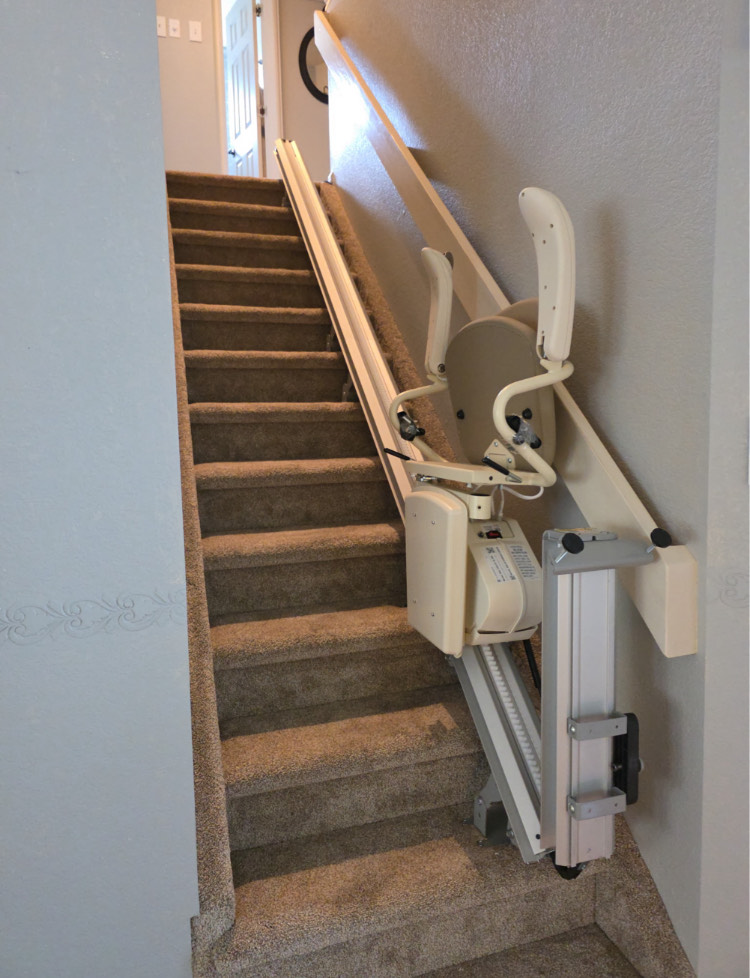 Myth #4: I'll lose my strength and balance if I'm not using the stairs every day like I used to. This doesn't have to be the case! We frequently install stairlifts for people who can still use the stairs, but they might also have "bad days" where their pain, weakness or balance makes navigating them more difficult than others. It's always better to have one and not use it than need it and not have one. As discussed in myth #2 above, people can still walk up and down the stairs with a lift installed- some smart folks even use it like a dumbwaiter and send their laundry, dishes, holiday decor, etc up and down on the chair using the remotes, while they take the stairs themselves. This allows them to see their path of travel, hold on to the handrails and maintain their center of gravity while letting the stairlift carry their goods. Once they arrive at the destination floor, the user can then safely remove the items from the chair and put them away without ever having to schlep another box up and down the stairs again.